

The best place to have adventures was at Will Woolman’s house. The boys had just finished 6th grade, and Ladd Callander didn’t need to wait for an invitation. His mom and Joanne Woolman were friends. Their husbands worked for the utility company in Huron County. They were always having tea together and sewing something from a pattern. Woolman’s new house was in rolling countryside south of Harbor Beach. It was situated in what was once the entrance yard of an old gravel pit. The boys could climb to the rim of the farthest excavation. They could see the horizon of Lake Huron from there. At a distance, the water seemed higher than the shore.
They didn’t always play outside, roaming the gouged contours through which a creek angled, eventually finding the lake. Will owned a tin model of the Alamo. There were hundreds of plastic Texans and Mexicans. They’d already seen the Davy Crockett movies at Huron Theatre. Both owned coonskin caps and replica muskets. Will also had a brace of plastic flintlock pistols like the ones Jim Bowie went down firing. But, last Halloween, Ladd’s dad, Clark, carved and painted a realistic Bowie knife for him to carry.
“I’m tired of this. We’ve been playing this for two years,” Will said. They sat on the broad floor of his upstairs bedroom amid scattered soldiers. Cannonball marbles, rolled with an echoing din across the hardwood floors, had decimated Santa Anna’s attack and most of the defenders.
“We could start over, only let the Texans win,” Ladd suggested.
“That would be fake. Anyway, they’ve won before. Just depends on how well you roll your marbles.” Will stood up and began scooting the soldiers together with his foot. Every floor upstairs was polished hardwood because his big sister had allergies. They couldn’t have a cat.
“Don’t we have to shoot the prisoners first?” Ladd read about that ugly part of the battle from a book in Harbor Beach Village Library. Disney left that part out and Ladd shouldn’t have mentioned it. Janice Callander told him that the brutality might have been over his head. She said she might have to speak with that librarian.
“I still don’t believe that.” Will took apart the adobe-colored walls. The cracks and pockmarks of shot and shell had been painted on for realism though the pattern of damage repeated on each metal section.
“Well, what’re we gonna do?” Ladd fed fistfuls of bodies into the common grave of a family-size Quaker Oats container.
“Let’s paddle the boats.”
The creek behind the Woolman house was just deep and wide enough for two small rafts built by Will’s father. They had sheet-metal bottoms and low sides of marine plywood. They floated on rows of sealed coffee cans welded together. They didn’t steer very well. But, even in early June with the current slowed, they allowed for a fun ride to the back of the property where the gravel had petered out. The boys thundered down the stairs.
“Mom, we wanta float on the creek.”
Joanne Woolman looked up from the Afghan she was already crocheting for someone’s Christmas. “Is Ward out there?”
“Ladd, you put on a life-vest,” Janice Callander called.
“Awww,” the boys groaned.
“Don’t give me that look. You can drown in three inches of water.”
There was another familiar pronouncement that Ladd had begun to doubt. That, and waiting two hours after eating before he could swim.
Ward Woolman was Will’s older brother. He would be in ninth grade when summer was over. Will went out on the kitchen porch to look. “He’s back by the garden.”
“Alright, then.” Mrs. Woolman adjusted the loops and trails of yarn in her lap. “When he comes in, I want you off the water.”
The boys charged into the mud room. They gathered the life vests and paddles piled by the back door.
“Are we taking guns?” Ladd asked.
“Well, what do you think? It’s Red Stick’s territory out where we’re goin’.”
“We need to make tomahawks. We should be carrying BB guns by now.”
“Yeah. Until that miracle happens, I’ll just have to trust Ol’ Betsy.” Will lifted his plastic musket off the patio table. He poked one of the replica pistols under his belt. “You can take the other one.”
“Wait up.” Ladd hustled to fetch his own Ol’ Betsy replica from the back seat of the Nash Rambler.
On the other side of the yard, beneath a weeping willow, the rafts were drawn up on a shaded mud flat. The stream seemed hardly to be moving.
“How deep is it now?” Ladd wanted nothing to do with the creek’s current when it was tumbling with snow-melt and the rainy spring. That was when they’d last visited in late April.
“A couple of feet. It’s really gone down.” Will put his arms into a vest but didn’t bother with the snaps. He knelt in the middle of the raft. He propped Ol’ Betsy in front of him. “Hey, push me out.”
Ladd tossed his life vest into the raft designated for him. He leaned against the stern of Will’s vessel. In the process of shoving it free, he got soakers in both sneakers. He’d have to pull them off to dry once he had launched himself.
“C’mon,” Will called. But he hadn’t gone very far. His raft turned slowly backward in the sluggish current.
Ladd pushed his own raft out a few feet. When the mucky shoes were off, a few paddle strokes caught him up to Will.
“We’re sittin’ ducks for river pirates.” Will began paddling and managed to turn himself downstream. “Who would you rather fight, Chief Red Stick or Mike Fink?“
“Mike Fink was big and slow,” Ladd replied. “What’d be worse? His big ol’ knife or Red Stick’s tomahawk?” He reached out to pat his weapon.
“A Bowie knife for either.”
The stream curled around the back of the Woolman’s yard then rounded a bend toward the far end of their huge garden. Another thing the moms did together was canning; first at one home, then the other. Long rows of little tomato plants had been set in along with rows of peppers and cukes. Intervals of string on stakes marked where the sweet corn was poking up. Ward Woolman was dumping something out of a landing net, plopping whatever it was between those strings.
Ladd’s mouth fell open. “Will? What is that?”
“Hey, dweebs!” Ward yelled. “Will hasta still do his weeding!”
“I’ve got company,” the little brother shouted back. “It’s just eels,” he told Ladd in a low tone. “They’re supposed to make good fertilizer.”
“I don’t get it.”
Will clucked his tongue. “Remember Squanto puttin’ rotten fish under the Pilgrims’ corn plants?”
“Oh, yeah. Right.”
As the rafts drifted past the bottom of the garden, it appeared to Ladd that the eels were still moving, writhing. A shudder crawled up his back. The sweat under his shirt was suddenly cool. Some of those things must be moving under this raft right now.
“That little piss-ant doesn’t count as company,” Ward said. “You owe Dad an hour.” He was following the bank of the creek just behind them, the net empty and dripping. He’d begun to wear pegged jeans even in summer with the sleeves of his tee-shirt rolled up over his shoulders. If his hands weren’t full, he’d probably be slicking his hair back every few minutes with a pocket comb.
“Those things were still alive,” Ladd croaked.
“Not for long.” Will dug in with the paddle. “They come upstream to lay eggs in the gravel. They already killed most of the lake trout, my Dad says. They were invading a species. Something. They suck out the fish’s blood.”
Ladd peered over the side. He would have liked to put his shoes back on but didn’t want to upset the raft. He moved to the very middle, careful with the paddle to keep his hands away from the water. No more wading, that’s for certain.
“Come on back here, Ladd! You gotta see the mouth on these things!” Ward grinned, showing his big teeth like all the Woolmans have. Not buck-toothed, exactly, but perfect for his mean horselaughs. He was coming closer behind the rafts, thrashing to overtake them. Ladd saw that he was wearing waders. The older boy eased the net into the water, dragging it against the current.
“Keep those things away from me,” Will shouted.
“Laa-aad. Come back here, Ladd! They want a kiss!” The net came up dripping with two more of the flopping black creatures, like snakes but with some kind of fin toward one end. They flopped in the net. “Here! Catch!” Ward made two lunges toward the boys, the pole of the net back over his shoulder as if to fling his ugly prey. But the boys had made it too far, drifted out of range. Ward splashed back onto the bank.
“Seems like he really hates ‘em.” Straight ahead, a thirty-foot shale cliff rose, where the gravel operation had petered out. Held together at the top by gorse bushes and skinny sumac saplings, it also marked the extent of the stream they were allowed to navigate.
“I guess because they put my grandpa’s fishing boat out of business. It was before the war but he thinks he knows all about it. Grandpa bought a gas station next to the marina, though, so he was OK for a while.” Will nudged the raft up to a weedy strip at the base of the cliff. “Then I guess some kinda rationing messed that up, too.”
“So, but why’s he hate us?” Ladd paddled and poled up next to Will. He wasn’t climbing out without putting on those shoes.
“Mom says he’s just goin’ through a phase. Anyways, I think I don’t ever wanta be a teenager.”
“A year-and-a-half, for me,” Ladd said. “We’ll have to get taps on our shoes.”
Ladd tied his sneakers, still wet but drained, over the wet stockings then leaped to shore. He strained to pull the raft up further then retrieved his musket. The cliff was so close he could touch it, which brought down a shower of fine crumbles. “We could hold out a long time from up at the top.”
Will nodded. “I know, but we can’t climb it. We’ll have to hike around the side like last time.”
“What happens if we try to climb?” Ladd sighted his weapon up and down the stream, watching for ambush.
“Erosion, Dad says. Like we read in Science.” Will batted at the burrs and nettles, mammoth Queen Anne’s lace with the barrel of Ol’ Betsy. “It’ll all get worn down and muck up the creek.”
“Well, if you don’t want to…” The longer route to the top was full of tall thistles. Ladd knew from Scouts that some types of the sumac could cause a bad rash.
“We could get out baseball cards.” Will thrashed back into the stream, tugging his raft behind him on a short rope, turning it around. “Did you bring your doubles?”
“Yeah. Is that what we’re doing?”
“You know we’re on the wrong side, don’t ya?”
“Aww, for cripe-sakes. I’m not wading,” Ladd protested. They were on the wrong side of the widest part.
“It’s okay, doofus. The current’s down to nothin.”
“I’m not worried about the current.” Ladd resumed his crouch in the raft and paddled like mad. Both boats were soon beached on the opposite mud flat. Mr. Woolman would haul them back to the house later, on a wagon behind his riding mower.
The boys followed a dusty two-track back through overgrown mounds of waste slag and useless clay. Over on the left, Ladd watched Ward flailing and chopping with a hoe.
“What’s he doing now?”
Will peeked over the tall weeds. “I think he’s workin’ ’em into the dirt. Looks like he’s havin’ fun, doesn’t it?”
Ladd watched, aghast at the flying dirt and what must be chunks of eel. Ward was going at the things as if he was fighting for his life. “Do you still have to pull weeds over there?”
Will could only shake his head in disgust. “Yup. I know. It’s gonna be nastier than ever.”
Ladd said: “I really don’t think that’s how Squanto did it.”
It took a few moments before Will began to chuckle. Ladd thought about what he’d just said and the serious, dead-pan way he’d said it. He began to laugh, as well. Then they were both doubled over.
“Not the way Squanto did it!” Will clutched his belly.
“Can you see Squanto, chopping up dead fish like Ward’s doing?” Ladd added. “And all the Pilgrims are kinda backing away?”
“Stop! Stop,” Will gasped, kneeling on the ground.
It occurred to Ladd that maybe getting stuff like this in the same way, and not just Davy Crockett or the baseball cards, was why they were friends. He put a cautioning finger to his lips. They surely didn’t want Ward to hear the hilarity and possibly come after them.
“I wouldn’t worry about it,” Will sighed, catching his breath. “Squanto seems to have other stuff on his mind.
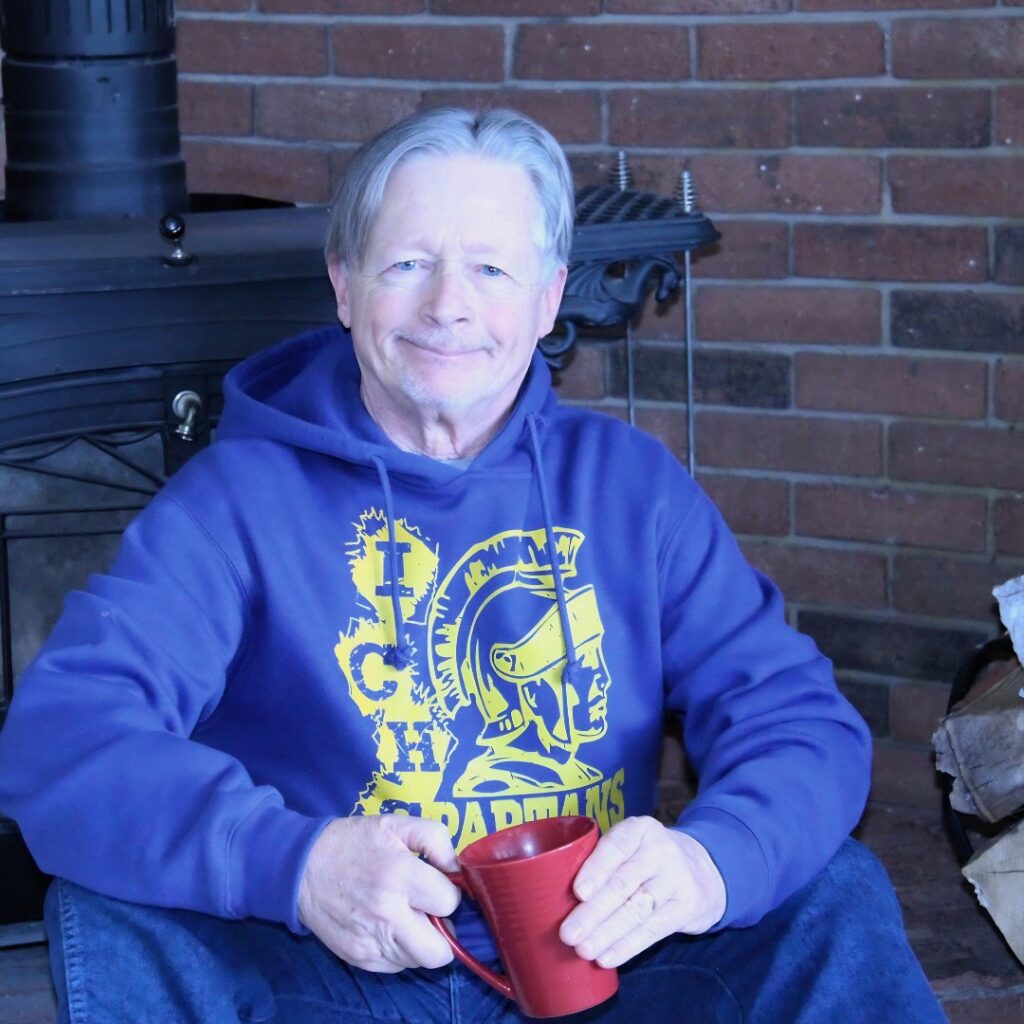
Chris Dungey is a retired autoworker from Michigan. More than eighty of his stories have appeared in literary magazines and online journals, most recently in Midsummer Dream House and The Parallel, with work forthcoming in Bookends Review. He is the author of the novel Evacuation Route and the collection We Won’t Be Kissing, both from ADP/Kindle. When not writing, he rides a mountain bike, a Honda scooter, and follows Detroit City FC with devotion.