
Overall Enjoyment: ⭐⭐⭐⭐.5
Plot: ⭐⭐⭐⭐
Characters: ⭐⭐⭐⭐
Writing: ⭐⭐⭐⭐
Spice: 🌶️
Synopsis:
The Odyssey by Homer tells the story of Odysseus on his ten-year journey home after the Trojan War. While he struggles to return to Ithaca, his wife, Penelope, and son, Telemachus, must contend with the aggressive suitors who have invaded their home to wed Penelope and seek to claim Odysseus’ throne.
Background:
During wedding celebrations among the gods, Eris, the goddess of discord, presented a golden apple inscribed “fairest of them all.” Athena, Aphrodite, and Hera each claimed the prize and chose Paris of Troy to judge between them. Aphrodite promised Paris he could have Helen, the most beautiful woman in the mortal world and wife of Menelaus, King of Sparta, if he selected her. Paris’ choice ultimately sparked the Trojan War.
Review:
“Tell me about a complicated man.”
That opening line perfectly establishes the central figure of the epic. Odysseus is one of literature’s most complex heroes. He is clever, far-thinking, manipulative, and immensely proud of these qualities. While these traits do help him and his people during the Trojan War, they certainly become his greatest weaknesses as he and his men are on their way home. His pride repeatedly leads them into misfortune; however, he doesn’t let these setbacks deter him, at least not for longer than he deems necessary and keep him from his ultimate goal.
Following Odysseus’ long journey and hearing his tales of adventures after Troy reveals just how little control the mortals had, as they were treated as the playthings of the gods. This is one of the earliest times in literature we see the unreliable narrator at play. Throughout the epic, humans are repeatedly shown to be at the mercy of the gods. Odysseus and his crew suffer the wrath, favor, and whims of numerous deities, reminding readers that fate in Greek mythology is often shaped by divine intervention.
Meanwhile, Telemachus embarks on a journey of his own to find out what happened to his father. His storyline serves as one of literature’s earliest coming-of-age narratives. He develops into someone beginning to discover his own strength and identity. His desire to protect his mother, Penelope, who is harassed daily by the suitors occupying their home, makes his growth an emotionally compelling story.
Ultimately, The Odyssey presents readers with a cast of complex characters who reflect different aspects of human nature. The epic demonstrates the dangers of pride and arrogance while also emphasizing perseverance, loyalty, and resilience. There are many moments when Odysseus could have surrendered, Penelope could have yielded, and Telemachus could have abandoned hope, yet each remains steadfast in the face of overwhelming adversity.
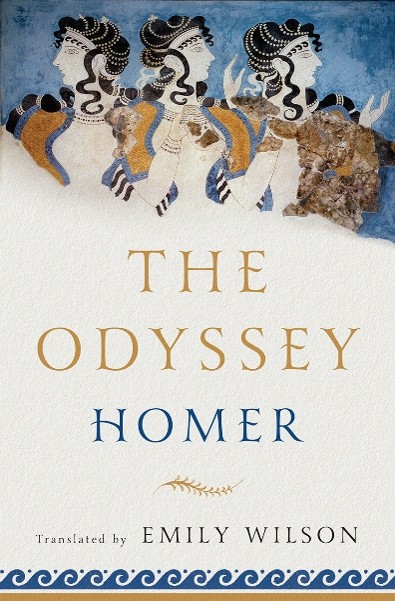
This review was done on the Emily Wilson translation due to it being the inspiration for the new film adaptation by Christopher Nolan.
I hope you enjoyed this review! Stay tuned for my next one! – Jules Grant, Associate Editor & Literary Critic